Understanding the standard paper size is essential for selecting the appropriate size for different printing needs, ensuring compatibility with printers and document requirements. The need for a standard paper size became apparent with the increasing rise of large-scale publishing across countries. Also, adopting standard paper sizes simplified the process, saved time, and facilitated document handling across various industries.
Here, we will embark on a journey and uncover the right paper size that offers a strong foundation for various documents that grace our desks and offices.
Also, read: 6 Ways To Change Paper Size On HP Printer
History Of Standard Printer Paper Sizes
The history of standard paper dates back to the introduction of ISO 216 in 1975. This standard paper size is used for international letterhead size A4, which measures 8.25 x 11.75 inches or 210 x 297 mm. ISO 216 was developed to establish a consistent and fixed paper size to simplify the design and production of documents. This brought the A-Series paper sizes into use, where AO is the largest and A10 is the smallest.
In 1995, the standardized paper size in North America was 8.5 x 11 paper. In the United States, the Standard Letter (8.5 x 11) size has been used for centuries, but later, all government documents switched to the standard 8.5 x 11 letter size.
Understanding Printing Paper Size Measurements
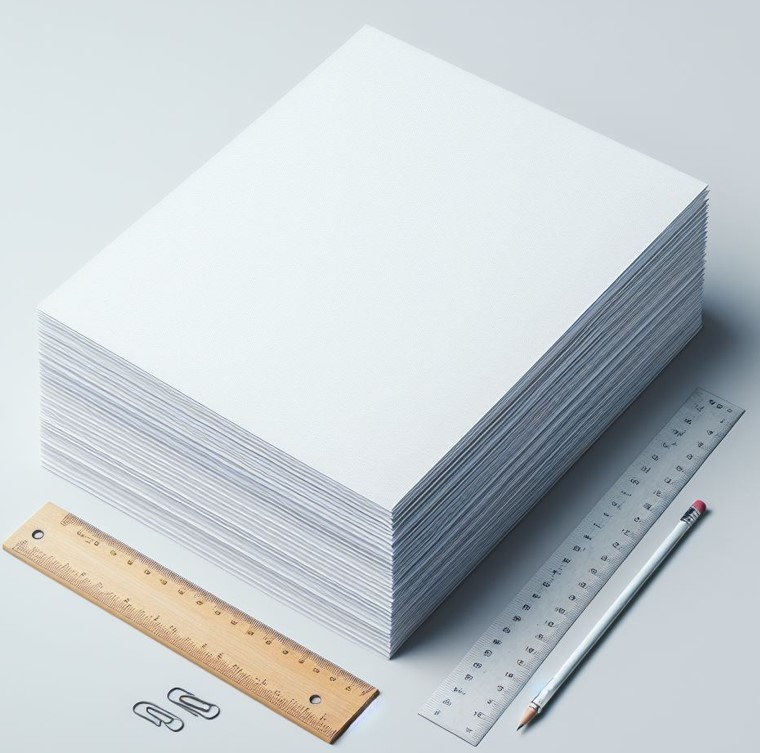
Understanding the paper size measurements will help recognize the historical evolution that has led to the establishment of the standard paper size, which is based on logical principles like aspect ratios and progressive scaling. Doing this will also simplify the processes, save time, and enhance compatibility across various industries that rely on printed materials.
There are two main standard paper sizes: the international ISO System and the North American System.
Here is a breakdown that will help you navigate:
International Standard Paper Sizes
Although many different paper sizes are available, ISO 216 is the world’s most common standard paper size. There are other sub-categories also, and some of the common ones are as follows:
- A4 (210mm x 297mm) is the most common document format for general printouts. It is slightly narrower and a bit longer than North American letter-size paper.
- A3 (297mm x 420mm) is displayed horizontally for presentations or more giant posters.
- A1 (594mm x 841mm) is the second-largest standard ISO paper size and is often used for larger displays and signage.
North American Sizes
North American paper sizes come in three different speeds and are measured in imperial units:
- Letter (8.5 x 11 inches): Letter-size paper is the standard size for everyday printing and is slightly smaller than the traditional A4 size.
- Legal (8.5 x 14 inches) – Legal-size paper is mainly used for legal documents and contrasts and is a bit longer than the traditional A4 size.
- Tabloid (11 x 17 inches) is rare, like Letters and Legal paper.
Factors Affecting Paper Size Choice
Choosing the right paper size will ensure that your documents print with minimal errors; here are a few factors that affect the paper size choice:
1. Printer Capabilities And Limitations
A printer that prints letter-sized paper cannot handle larger paper, so it is always best to choose a printer that can handle different paper sizes to avoid inconveniences.
2. Type Of Documents Being Printed
The A4 and US letters are ideal for printing office and school documents such as letters, assignments, invoices, and other documents that require standard paper sizes. Flyers and posters need more space and work better on Tabloids.
3. Personal Preference And Convenience
People have varied levels of preference when choosing a print paper. Some people prefer smaller prints as they are easy to handle and carry out printing. However, few people also prefer huge papers as they provide more room for printing purposes.
Common Paper Size
The table below outlines the A-Class, the most commonly used day-to-day paper.
| Paper | mm | cm | Inches |
| A0 | 841 X 1189 mm | 84.1 x 118.9 cm | 33.1 x 46.8 inches |
| A1 | 594 x 841 mm | 59.4 x 84.1 cm | 23.4 x 33.1 inches |
| A2 | 420 x 594 mm | 42 x 59.4 cm | 16.5 x 23.4 inches |
| A3 | 297 x 420 mm | 29.7 x 42 cm | 11.7 x 16.5 inches |
| A4 | 210 x 297 mm | 21 x 29.7 cm | 8.3 x 11.7 inches |
| A5 | 148.5 x 210 mm | 14.85 x 21 cm | 5.8 x 8.3 inches |
| A6 | 105 x 148.5 mm | 10.5 x 14.85 cm | 4.1 x 5.8 inches |
| A7 | 74 x 105 mm | 7.4 x 10.5 cm | 2.9 x 4.1 inches |
| A8 | 52 x 74 mm | 5.2 x 7.4 cm | 2.0 x 2.9 inches |
| A9 | 37 x 52 mm | 3.7 x 5.2 cm | 1.5 x 2.0 inches |
| A10 | 26 x 37 mm | 2.6 x 3.7 cm | 1.0 x 1.5 inches |
Importance Of Accurate Measurements For Printing
Accurate measurements are crucial for successful printing, and here is why it is essential:
- Precision in design transfer
- Flawless assembly
- Material waste reduction
- Consistent quality
- Avoiding printer issues
Additional Tips To Ensure Accurate Measurements
Here are some additional tips to ensure accurate measurements in printing:
- Double-check your measurements
- Use the correct software tools
- Specify units clearly
- Consider printer margins and bleed areas
Frequently Asked Questions (FAQs)
- What Is The Significance Of The Letter Size On Paper?
The letter size is a widely used standard in many countries, especially in North America. It is equivalent to 8.5 x 11 inches or 216 x 279 mm, often used for documents and printing.
- What Are The Different Paper Sizes Available In The Market?
A wide range of paper sizes is available to cater to various needs, such as envelope sizes, sheet sizes, and different sizes used for specific purposes in the printing industry.
- How Does The ISO Paper Size System Work?
The ISO Paper size system, including ISO A4, is based on the metric system and provides a logical and consistent way to define different paper sizes. It simplifies the international communication and printing process.
Wrap Up
To conclude, the concept of standard paper size for printers has evolved due to changing needs in printing technologies and global standardization. As we navigate the landscape of printers and printing technology,, standard paper sizes vary globally, but the A series is the common standard based on the ISO 216 system. Therefore, understanding these standard sizes is crucial for selecting the correct paper size while printing documents or images to ensure proper formatting and compatibility with different printing devices.


